
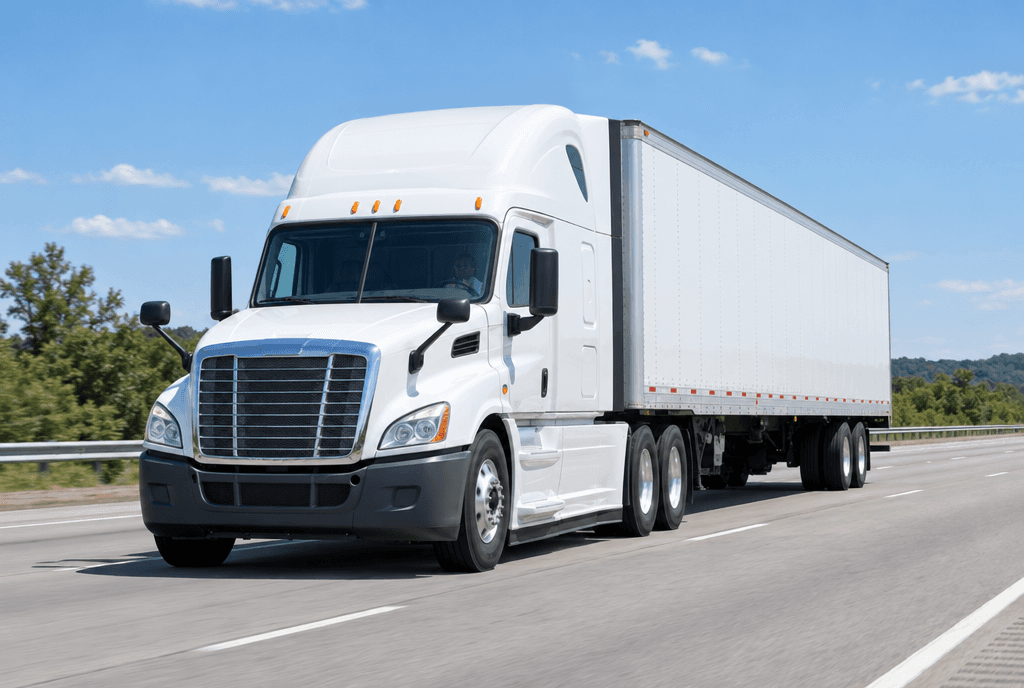
If you ship freight regularly, one of the first decisions you make on every load is how it travels: as a full truckload (FTL) or as less-than-truckload (LTL). It sounds like a small, technical choice, but it quietly shapes your cost, your transit time, and how many times your product is touched before it reaches the customer.
This guide breaks down what FTL and LTL actually mean, the real trade-offs between them, and a simple way to decide which one fits a given shipment. By the end you should be able to look at a load and know, almost instantly, which service makes sense.
1. What is full truckload (FTL) shipping?
Full truckload shipping dedicates an entire trailer to a single shipment. Whether you physically fill every inch of the trailer or not, the space is yours, and your freight rides from pickup to delivery without being combined with anyone else's goods.
Because the trailer is dedicated, FTL freight usually travels point-to-point with no intermediate terminals, no re-handling, and no waiting for other shipments to be consolidated. That direct path is the single biggest reason shippers choose full truckload for larger, time-sensitive, or fragile loads.
2. What is less-than-truckload (LTL) shipping?
Less-than-truckload shipping does the opposite: it combines freight from several different shippers into one trailer. You only pay for the portion of the trailer your shipment occupies, which can make LTL very cost-effective for smaller loads.
The trade-off is handling. LTL freight typically moves through terminals where it is unloaded, sorted, and reloaded alongside other shipments. Every one of those touchpoints adds time and a small amount of risk, which is why packaging matters so much more for LTL than it does for a dedicated truckload.
3. The real differences: cost, speed, and handling
On cost, LTL usually wins for small shipments because you share the trailer. As your freight grows, though, there is a crossover point where paying for several LTL pallets costs as much as — or more than — simply booking the whole truck.
On speed, FTL is generally faster because it skips the consolidation and terminal network. An LTL shipment might make several stops before yours is delivered; a full truckload goes straight there.
On handling, FTL freight is loaded once and unloaded once. LTL freight can be handled many times. If your product is fragile, high-value, or awkward to stack, fewer touches almost always means fewer problems.
4. When full truckload is the right call
Full truckload tends to be the better choice when you have enough freight to fill or nearly fill a trailer — often cited as roughly ten pallets or more, though the real threshold depends on weight and dimensions.
It is also the right call for time-sensitive deliveries, for fragile or high-value goods that benefit from minimal handling, and for consistent, recurring lanes where a dedicated arrangement can lock in reliable capacity.
5. When less-than-truckload makes more sense
LTL is a strong fit when you are moving a handful of pallets, when timing is flexible, and when keeping cost down matters more than shaving a day off transit.
Many growing businesses start with LTL and shift toward full truckload as their order sizes increase. There is no single right answer — the best shippers simply match the service to the shipment instead of defaulting to one every time.
6. A quick decision checklist
Ask four questions about the load: How much is it? How urgent is it? How fragile or valuable is it? And how predictable is the lane? Large, urgent, fragile, or recurring freight leans toward FTL. Small, flexible, durable, one-off freight leans toward LTL.
If you are still unsure, describe the shipment to your carrier and let their team recommend an approach. A good carrier would rather set you up correctly than sell you the wrong service.
FTL versus LTL is really a question of matching the service to the freight. Once you understand the trade-offs in cost, speed, and handling, the choice usually makes itself.
Uzum Logistics specializes in full truckload and dedicated capacity across the United States. If you have truckload freight to move, request a quote and our team will help you pick the right fit.